Vinay Mundhe

A Software Developer Writing on Tech, Money, and Life

Category: Current Events & Opinion

  • Forget Pakistan. It’s time India levels up.

    Forget Pakistan. It’s time India levels up.

    Another conflict. Another headline cycle. Pakistan threw its usual tantrum. We stayed calm, and this time, we showed them.

    200+ drones. Neutralised overnight.
    Missiles? Shot down.
    Our own version of the Iron Dome? Tested. Live. Not in a lab. Not on a PowerPoint.

    This wasn’t just defense. It was a product demo for the world.

    India’s defence tech isn’t just ready. It’s market-ready. And unlike China’s systems, the ones Pakistan used, ours actually work.
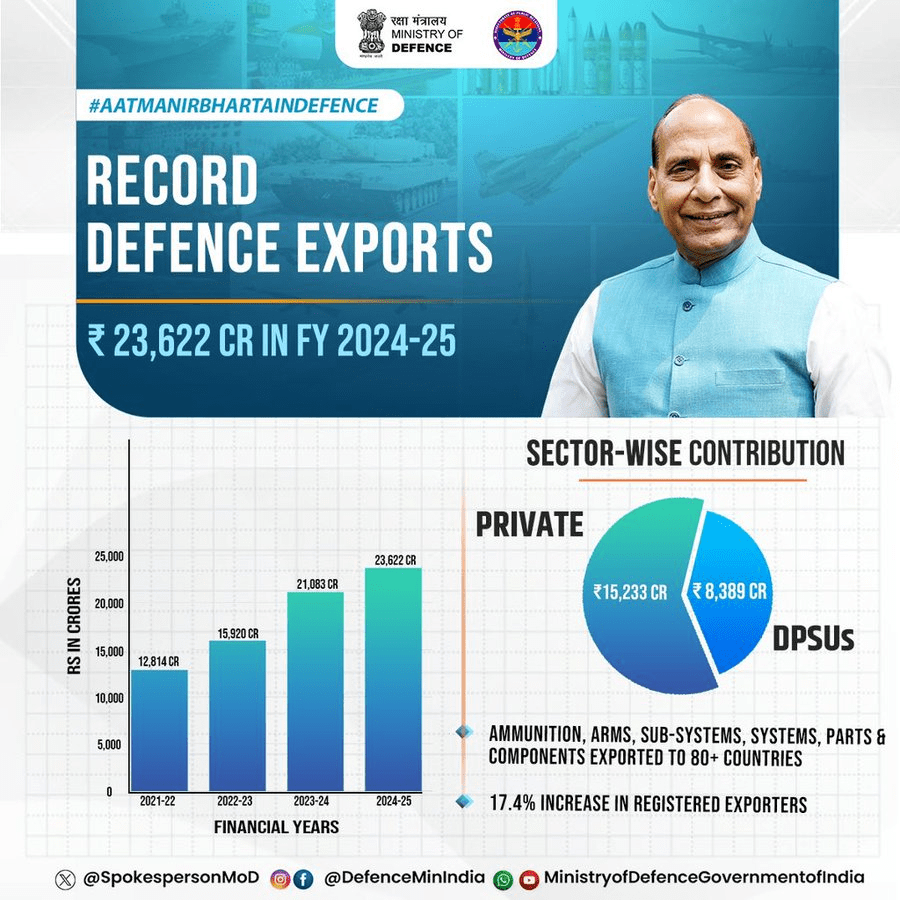
    India’s defense exports has already got the momentum. In 2017 our defense export was around ₹1521 Crore. And now in 2025, exports are up to ₹23600 Crore.

    Its poised to go up and up after this.

    But here’s the thing. This war shouldn’t define us. It should wake us up. Because we already know how to handle Pakistan.

    We bleed them slowly. Quietly.
    “Unknown man kills a terrorist” — that’s the headline we aim for.
    Keep hitting their roots till their morale hits rock bottom.
    So that when the day comes, and we really announce an attack, Pakistani soldiers abandon their border posts and run for their lives.

    That’s how you take down a rogue state — by weakening it from within. Not by reacting, but by outgrowing.

    Pakistan is not the goal. China is.

    I remember reading a line from a Pakistani journalist when our businessmen visited Pakistan for some event few decades back.

    “We don’t fear India’s new weapons. We fear the day Indian billionaires land in Islamabad in their private jets.”

    That’s the power we need to chase. The kind that doesn’t just win battles, but dominates boardrooms.

    We don’t need another border skirmish.
    We need GDP growth.
    We need billion-dollar IPOs.
    We need our own Nvidia, our own Tesla, our own AI giants.

    Let’s not waste time chasing a neighbour stuck in the past.
    Let’s build. Let’s sell. Let’s grow.
    And when the world talks about superpowers in 2040, let’s make sure India isn’t just on the list. It leads it.


  • Indian Banks: The Biggest Legal Robbers No One Talks About

    Indian Banks: The Biggest Legal Robbers No One Talks About

    Let’s start with a simple question — when you open a savings account, who do you think is doing a favor? You, by trusting them with your money? Or them, by “letting” you be their customer?

    If you said “them,” congratulations, you just described the Indian banking system’s mindset.

    How Indian Banks Are Robbing You Silently

    Let’s talk about facts, not feelings.

    According to a report from The Hindu Business Line, public sector banks (PSBs) alone collected around ₹8500 crore between FY20 and FY24 just by penalizing people for not maintaining minimum balance.

    Yes, you read that right.

    In the middle of a pandemic, inflation, job cuts — our “saviours” were busy fining people for not keeping enough money in their accounts. The same people who probably couldn’t make ends meet were slapped with penalties because their account balance wasn’t up to the banks’ “standards.”

    Imagine punishing a drowning man for not swimming properly.

    And it doesn’t end there.

    As per another report by Moneylife, banks have written off ₹1.635 lakh crore of bad loans in just the past ten years.

    You and I are being fined for not keeping ₹5000 in our account. Meanwhile, the big boys — companies and corporates — default on crores, and the banks just “write it off.” It’s like you lending money to someone, they ghost you, and you just shrug and say, “Forget it.”

    But if your balance falls by ₹50, you’re a criminal in their eyes.

    Who Are Banks Actually Working For?

    It’s clear — banks in India seem to work for the big corporates, not the common man.

    They squeeze the small guy dry with penalties, fees, hidden charges, service tax, and then calmly “forgive” massive loans of rich borrowers. No follow-ups. No stress. No shame.

    And you know what’s worse?

    Despite this robbery model, they are still some of the “top” companies in India.

    Compare This: India vs USA

    Let’s look at the latest top 10 companies by market cap.

    US Top 10 (April 2025):

    • Apple
    • Microsoft
    • Nvidia
    • Alphabet (Google)
    • Amazon
    • Meta (Facebook)
    • Berkshire Hathaway
    • Eli Lilly
    • Broadcom
    • Exxon Mobil

    Almost all are tech, innovation, or healthcare-driven, except Berkshire and Exxon.

    India Top 10 (April 2025):

    • Reliance Industries
    • TCS (Tata Consultancy Services)
    • HDFC Bank
    • ICICI Bank
    • Infosys
    • Bharti Airtel
    • State Bank of India (SBI)
    • Kotak Mahindra Bank
    • ITC
    • Bajaj Finance

    Notice something?

    Banks everywhere.

    The US top companies are inventing the future. Our top companies are collecting EMIs, charging penalties, and funding “write-offs.” This is the sad reality.

    What’s the Cost to Us?

    This system discourages savings, hurts financial literacy, and makes the common person feel small and helpless.

    Instead of rewarding savers, supporting small businesses, or investing aggressively into tech, innovation, or manufacturing — our banking system is busy building castles of “service charges” and “processing fees” on the backs of regular citizens.

    Banks were supposed to be pillars of trust. Instead, they have become legalized mafia, operating behind a curtain of regulation.

    Time for a Wake-Up Call

    The next time you hear a politician or a banker talk about “financial inclusion,” remember — the same system is designed to profit off your struggle.

    The same system that fines you for being poor and forgives billionaires for being reckless.

    Maybe it’s time we start questioning not just bad governance but also bad banking.

    Because if banks are supposed to be the backbone of our economy, ours are busy breaking it, one penalty at a time.

    Stay aware. Stay woke. Protect your money — because clearly, no one else will.

  • Life in Rising Temperatures

    Life in Rising Temperatures

    Right now, I’m writing this sitting in Malkapur – my hometown.
    Tucked near the border of Madhya Pradesh, right in the heart of Maharashtra, this small town has always held a simple, quiet charm for me. But this time, something feels different.

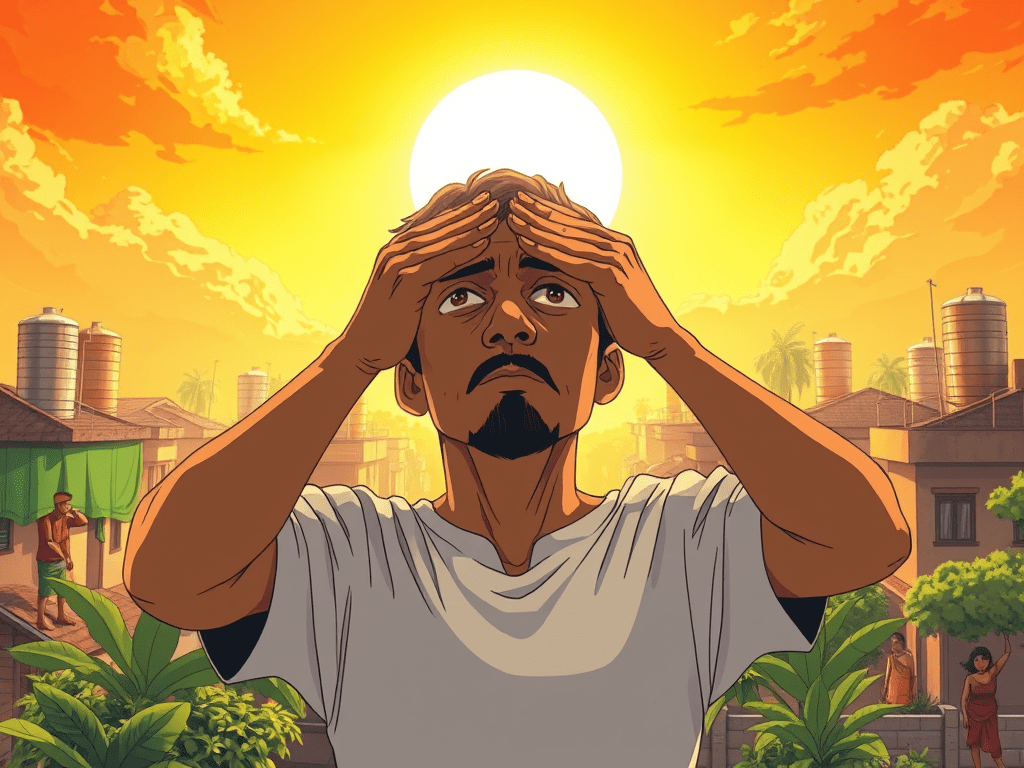
    Summer has arrived, and with it, the brutal reality of rising temperatures. As I walk through familiar streets, I can’t help but notice how people are adapting to survive the heat. Almost every house now has an air conditioner or, at the very least, a water cooler. Honestly, I can’t imagine a home here without one.

    Green cloths and makeshift covers hang across balconies, terraces, and windows – a desperate but clever attempt to block the ruthless sunlight from turning homes into furnaces. It’s not just about comfort anymore.

    It’s about survival.

    Water scarcity is another daily battle. With an unreliable water supply during summer, people have turned to large storage tanks stacked atop their buildings. It’s a common sight now, as essential as the walls that hold the homes together.

    As I sit here at 6:20 p.m., during the last week of April, the temperature outside is still hovering around 37°C. It goes up to 43°C at peak time and even at 3:00 a.m night time., when the world should feel a little cooler, it barely drops to 27°C.

    That’s the harsh reality today.

    And honestly, it’s crazy when I think about how things used to be.

    I remember a time – just 10 years back – when we used to play cricket till noon under the summer sun. Sure, it was hot back then too, but it was manageable. We never even thought twice about it.

    Today, stepping out after 10 a.m. for a simple game feels unthinkable. The heat isn’t just uncomfortable anymore – it feels dangerous.

    This rising temperature wave isn’t just making summers tough.
    It’s starting to affect livelihoods.

    Daily wage workers, street vendors, construction workers – they now avoid working between 12 to 5 p.m., because it’s almost impossible to function in that kind of heat. Work slows down, incomes shrink, and the struggle only gets harder.

    But amidst these challenges, there’s a silver lining.

    I noticed something hearteninggreenery.

    More trees. More plants. It seems people have realized the old wisdom: plant more trees, get more rain. In fact, Malkapur looks much cleaner and greener compared to three or four years ago. It feels like a town trying to breathe again, trying to heal itself in small but significant ways.

    Yet, a question lingers in my mind – will these efforts be enough?
    Will planting trees, covering windows, and storing water really solve the larger problem of rising temperatures year after year?

    Or are we just buying time, without addressing the root causes?

    This is a question not just for Malkapur, but for every small town grappling with the harsh face of climate change.

  • Clean streets, clean minds

    Clean streets, clean minds

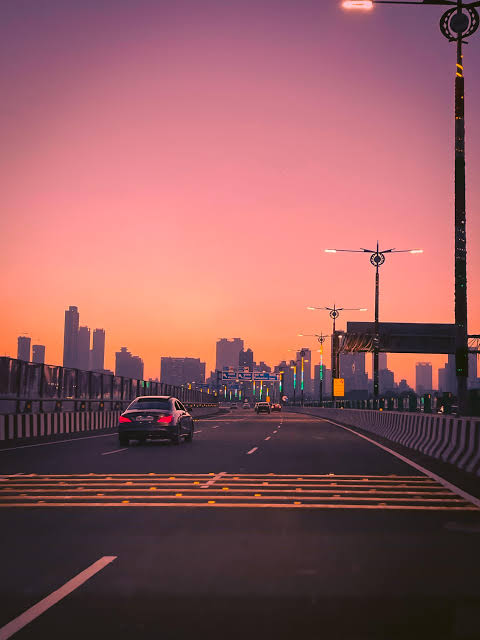
    The Atal Setu revealed Mumbai’s eastern skyline like never before—a view we hadn’t been exposed to until now! We all value good infrastructure—smooth roads, towering skyscrapers, and bustling urban spaces. These are undoubtedly markers of progress. But while we invest heavily in them, are we paying enough attention to something just as crucial?

    India has something no other country can replicate: its unique culture, diversity, and soul. The chaotic charm, the vibrancy, the history—it’s all here. But we’re missing one key element to make this a world-class experience: cleanliness.

    I recently visited Banaras, and while the experience was mesmerizing, one thing stood out to me—the city was dirty. The ghats, which are such a vital part of our culture and heritage, were littered with garbage and waste. I couldn’t help but wonder—why would foreigners visit a place where we don’t even offer a clean environment, free from gutkha stains and trash?

    The truth is, there’s a far bigger mess to clean up—one that goes beyond the garbage on the streets. It’s a mindset issue, and it starts with educating young minds. We need to teach the next generation that keeping public spaces clean is just as important—if not more—than keeping their homes spotless.

    This isn’t a quick fix. It’s a 100-year journey—a process of rebuilding the psyche of an entire nation. But imagine the possibilities.

    We don’t need to replicate anyone else’s success story. We just need to organize ourselves, take pride in our surroundings, and instill these values deeply in our people.

    And here’s where the future holds even more promise. With population decline projected after 2060, we have a rare opportunity to plan strategically and rebuild—not just our infrastructure, but our collective mindset. A cleaner, more organized India will open doors to opportunities, attract global admiration, and pave the way for long-term prosperity.

    To make this vision a reality, programs like the Swachh Bharat Abhiyan must become more than just campaigns—they need to be integrated into our daily lives. This cultural shift is vital for building a thriving, prosperous India.

    The vision isn’t just about polished infrastructure. It’s about creating a nation where we are as proud of our public spaces as we are of our homes. That’s the India we owe to the future.

  • Have options. They’re a superpower

    Have options. They’re a superpower

    Ever feel like the system is rigged against you?

    Picture this: a massive wildfire erupts, and the fire department, our supposed first line of defense is struggling, out of water, out of solutions, totally unprepared.

    Meanwhile, influencers and celebrities flood social media, asking you to donate money.

    Seriously? Haven’t we been paying taxes all these years? Isn’t it the government’s job to allocate emergency funds? Why does the burden always come back to us?

    And here’s the bitter truth: when disasters strike, it’s always the middle class that bears the brunt. We suffer the most, yet we’re the first to be asked for more.

    This is just not just happening in America, in india too, you feel helpless as a middle class citizen. You bear the burden of the majority of the population who either don’t pay taxes/ or is unproductive to an extent.

    So, what’s the solution?

    As tough as it sounds, get out of the middle class. Hustle like your life depends on it. Build an income that gives you choices, the freedom to live where you want, do what you want, and say “f you” to anything or anyone holding you back.

    Options aren’t just a luxury, they’re a superpower. And you owe it to yourself.