Vinay Mundhe

A Software Developer Writing on Tech, Money, and Life

Tag: AI

  • Problem Solvers, Not Coders

    Problem Solvers, Not Coders

    If you’re a software developer in 2025, here’s the harsh truth:
    AI can write cleaner code than you.
    And faster.
    And without taking tea breaks.

    But let me assure you… the companies still need you.

    Not because you can write a controller class or map a JSON properly. But because you can solve problems that AI still can’t understand.

    Let me explain.

    1. Modern backend work is not “write Java code → commit → done.”

    Every system today is a giant maze of services, downstream integrations, rules, edge cases, legacy decisions, and business logic stitched together over many years.

    AI can generate code, sure.
    But can it understand why a downstream service is silently swallowing errors for New York state only?
    Can it debug a 500 that only appears in QA at 3 PM when a specific flag is ON?
    Can it map different responses while also ensuring no other state is impacted?

    No. That’s your job.

    Backend development is not about syntax.
    It’s about context.
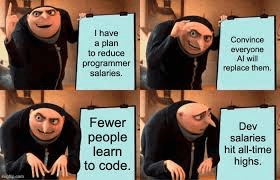
    2. The winners in AI era will be “connect-the-dots” engineers

    AI is a beast at tasks.
    But AI still struggles with relationships:

    • Why this field exists
    • How one decision breaks five other flows
    • How legacy systems behave
    • Why a business constraint matters
    • How to design for long-term, not just patchwork

    This is where real engineers win.

    When you can look at a messy system, ask the right questions, and find the real root cause behind an issue… that’s a superpower.

    AI can give answers.
    But it still can’t understand the exact problem.

    3. Every company has complex operations and they need humans with expertise

    You’ve probably seen this in your own job:
    Even simple requests blow up into multi-branch logic, state-specific rules, lookups, transformations, and 10 other conditions.

    AI can’t read 20 years of operational history.
    You can.

    That’s why backend developers who learn to think like problem solvers will grow fast.

    4. How to upgrade yourself starting today

    Here’s what I’m doing in my own journey:

    • I’m learning domain modelling, not just mapping
    • I’m understanding system behaviour, not just services
    • I’m learning to ask: what problem are we solving?
    • I’m building real projects like VinAsset to learn design thinking and practice

    Coding is important.
    But connecting dots is everything.

    The takeaway

    AI won’t replace backend developers who think clearly, understand business deeply, and solve problems at a system level.

    If you want to survive this decade, become the engineer who sees what AI doesn’t:

    The why behind the what.
    The connection behind the code.
    The problem behind the symptom.
  • When AI Steps Out of the Screen

    When AI Steps Out of the Screen

    Every day I scroll through news feeds talking about AI breakthroughs-GPTs writing code, Midjourney generating art, AI agents planning our entire day. And yet, when I look around-step outside, walk my street, grab a coffee-everything still feels… normal.

    Still see the traffic, Broken roads, Weird town planning.

    That gap between what AI can do and what we see it doing in the real world? It’s because AI, for now, is trapped. It’s stuck inside screens, chips, and cloud servers. It doesn’t have hands. It doesn’t move.

    But we’re closer to changing that than you think.

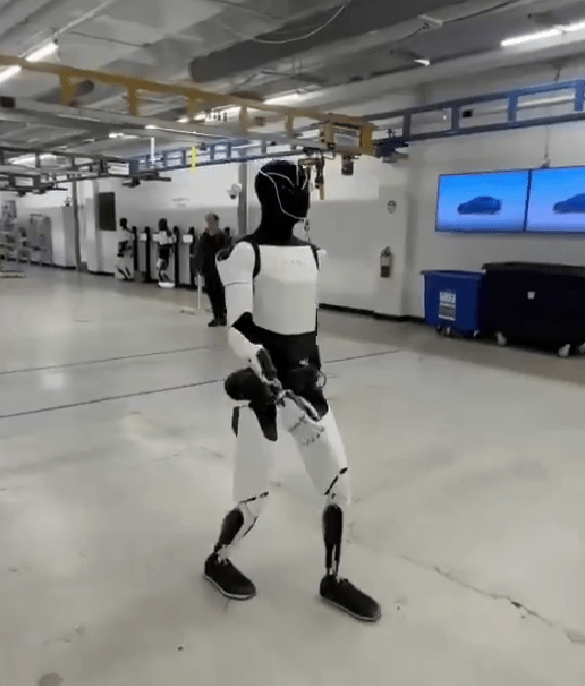
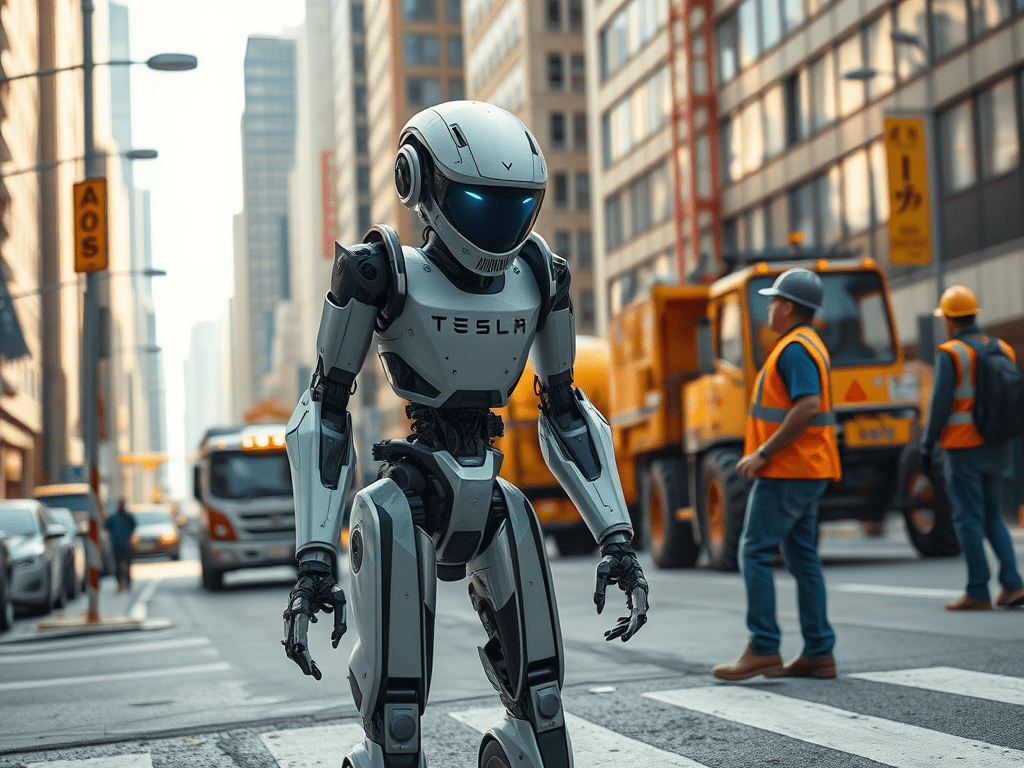
    Elon Musk recently shared a video of Tesla’s humanoid robot, Optimus, trying to walk.

    No, it’s not Iron Man (yet). But it’s moving. It’s learning. And what struck me wasn’t just the robot-it was Musk’s quiet announcement: Tesla is preparing to produce 10,000 to 12,000 Optimus units this year. In 2025, that could scale to 5,000 robots ready to hit the real world.

    Let that sink in.

    Not just AI in your pocket. But AI building your world.

    Now imagine this:

    • A team of humanoid robots working on road construction 24/7, without breaks or burnout.
    • A squad assembling homes brick by brick-precision, speed, no human risk.
    • AI-driven city planning bots laying out smarter, greener, more sustainable towns.
    • Manufacturing plants where robots do the heavy lifting, literally, while humans manage, direct, and innovate.

    This isn’t sci-fi anymore. It’s groundwork for the next revolution-when AI doesn’t just think, but also acts.

    And the best part? It could drastically improve the quality of human life. Lower construction costs. Faster disaster relief. Safer, cleaner cities. And maybe, just maybe, help us build homes on Mars one day.

    But here’s the catch-intelligence without ethics is dangerous. We don’t need a real-life Skynet. We need moral frameworks, strict boundaries, and strong governance to guide this tech. These robots shouldn’t just walk-they should walk right.

    We’re entering an era where AI will leave the chat window and walk into our neighborhoods. It’s not a matter of if. It’s when. And it’s happening faster than we think.

    The real question is-are we building the world we want to live in?

  • Zomato Just Replaced 600 Employees With an AI Agent

    Zomato Just Replaced 600 Employees With an AI Agent

    Last night, I opened Zomato to order dinner. Something went wrong with the delivery, classic Friday chaos! I tapped “Support,” expecting a long wait or an endless chatbot loop. Instead, I was done in under two minutes.

    No human, no hold music… just a smooth conversation with what felt like a very, very smart AI. And I thought to myself: Damn, this bot’s got game.

    Then today, I saw the headline:
    Zomato lays off 600 customer support employees.

    Why?
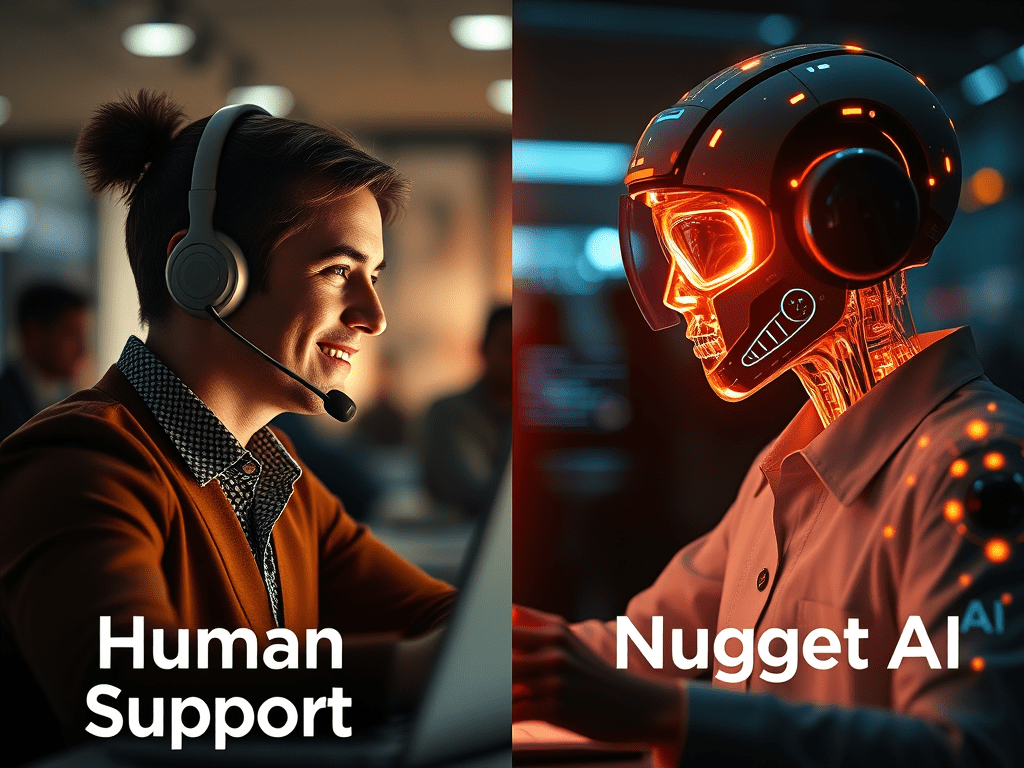
    Because automation is stepping up. And its name is Nugget.

    So… what is Nugget?

    Built over the last 3 years as an internal tool, Nugget isn’t your average “Hi! How can I help you today?” kind of bot. It’s been quietly powering over 15 million support conversations every month across Zomato, Blinkit, and Hyperpure.

    Now it’s out of stealth mode.
    Now it’s public.
    Now it’s replacing jobs.

    Harsh? Maybe. But here’s the kicker…

    Nugget resolves up to 80% of queries autonomously, learns and adapts in real-time, and requires zero code to integrate. No dev team needed. No clunky workflows. Just seamless, customizable automation that actually works.

    90% of companies who’ve tried it signed up.

    Check it out here: nugget.com

    What’s happening behind the scenes?

    Let’s call it what it is… a shift.
    Zomato didn’t just randomly decide to cut 600 jobs. They replaced people with software. Efficient, scalable, tireless software. And they did it because they could.

    I’ve personally seen it in action. As a regular customer, I’ve reached out to Zomato’s support multiple times. From missing items to refunds… Nugget handled it better than most humans would. Fast. Precise. Polite. No attitude. No errors.

    This isn’t just cost-cutting. It’s efficiency at scale.

    And that’s the part no one’s talking about enough.

    But here’s the real question:

    Is this the future of customer support?

    If your business still relies on a bulky support team, long ticketing systems, and manual resolution queues, Nugget is your wake-up call. It’s not just an AI tool. It’s a glimpse of what tomorrow looks like.

    The same way Zomato disrupted food delivery, it’s now disrupting customer support.

    It’s bittersweet.
    600 people lost their jobs. That’s not a small number. But it also signals a massive shift in how tech companies operate. A shift towards leaner ops, AI-first thinking, and internal innovation.

    Nugget isn’t just a support tool.
    It’s Zomato’s first product from Zomato Labs… their innovation incubator.

    The future’s not coming.
    It’s already here.
    And apparently, it’s called Nugget.

  • Opportunity of a lifetime!

    Opportunity of a lifetime!

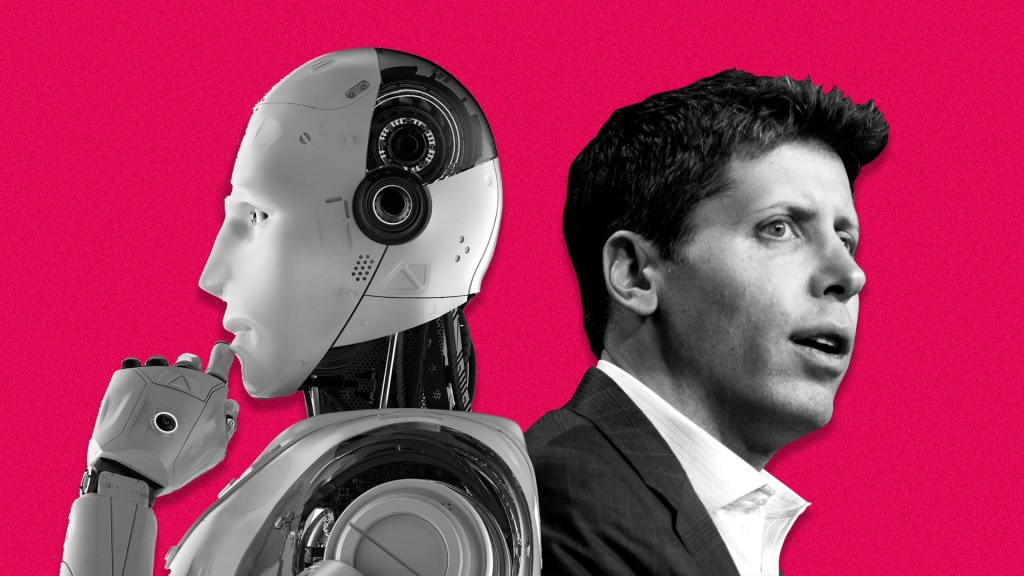
    I recently came across a reel of Sam Altman (CEO of OpenAI), where he was saying something like-

    “This is the best time to start a new career. The fear of failure or things not working out doesn’t weigh as heavily now, especially for those stepping into tech. Why? Because the next few years are going to be flooded with opportunities like never before.”

    I loved that reel. We’re at the cusp of exponential growth in technology, and the driving force behind this?

    Artificial intelligence.

    AI is already here big time and it is about to accelerate humanity into an entirely new era.

    Think of it this way: right now, AI is like a college graduate. It’s capable of doing tasks we associate with that level of expertise, like writing code, drafting content, solving problems. But here’s the twist: AI is constantly learning. Every interaction, every input from users around the world is shaping and evolving it.

    Soon enough, this graduate evolves into a post-graduate, more capable, more sophisticated. Before long, it’s a PhD holder, solving problems at a level we once thought only human geniuses could achieve.

    And then, imagine this: what happens when AI reaches the IQ of an Einstein?

    At that point, something incredible occurs. The future of innovation won’t come solely from human minds, it’ll come from AI. Infinite computational power means infinite potential. AI won’t just be a genius; it will be countless geniuses working simultaneously, innovating in ways we can barely comprehend right now.

    This is why I believe if you’re in tech or even thinking about entering the field, you’re standing at the edge of a massive wave. But here’s the catch: you have to stay sharp. You have to be willing to adapt, to learn, and to grow alongside these advancements.

    So, dive in, stay on your toes, and make sure you’re in it to swim. Because the future isn’t waiting, it’s already here, and it’s moving fast.