Vinay Mundhe

A Software Developer Writing on Tech, Money, and Life

Tag: Career

  • Problem Solvers, Not Coders

    Problem Solvers, Not Coders

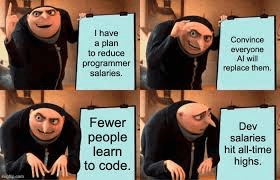
    If you’re a software developer in 2025, here’s the harsh truth:
    AI can write cleaner code than you.
    And faster.
    And without taking tea breaks.

    But let me assure you… the companies still need you.

    Not because you can write a controller class or map a JSON properly. But because you can solve problems that AI still can’t understand.

    Let me explain.

    1. Modern backend work is not “write Java code → commit → done.”

    Every system today is a giant maze of services, downstream integrations, rules, edge cases, legacy decisions, and business logic stitched together over many years.

    AI can generate code, sure.
    But can it understand why a downstream service is silently swallowing errors for New York state only?
    Can it debug a 500 that only appears in QA at 3 PM when a specific flag is ON?
    Can it map different responses while also ensuring no other state is impacted?

    No. That’s your job.

    Backend development is not about syntax.
    It’s about context.

    2. The winners in AI era will be “connect-the-dots” engineers

    AI is a beast at tasks.
    But AI still struggles with relationships:

    • Why this field exists
    • How one decision breaks five other flows
    • How legacy systems behave
    • Why a business constraint matters
    • How to design for long-term, not just patchwork

    This is where real engineers win.

    When you can look at a messy system, ask the right questions, and find the real root cause behind an issue… that’s a superpower.

    AI can give answers.
    But it still can’t understand the exact problem.

    3. Every company has complex operations and they need humans with expertise

    You’ve probably seen this in your own job:
    Even simple requests blow up into multi-branch logic, state-specific rules, lookups, transformations, and 10 other conditions.

    AI can’t read 20 years of operational history.
    You can.

    That’s why backend developers who learn to think like problem solvers will grow fast.

    4. How to upgrade yourself starting today

    Here’s what I’m doing in my own journey:

    • I’m learning domain modelling, not just mapping
    • I’m understanding system behaviour, not just services
    • I’m learning to ask: what problem are we solving?
    • I’m building real projects like VinAsset to learn design thinking and practice

    Coding is important.
    But connecting dots is everything.

    The takeaway

    AI won’t replace backend developers who think clearly, understand business deeply, and solve problems at a system level.

    If you want to survive this decade, become the engineer who sees what AI doesn’t:

    The why behind the what.
    The connection behind the code.
    The problem behind the symptom.

  • Reflecting on missed opportunities

    Reflecting on missed opportunities

    10 Years Later, I Finally Get It: Why I Didn’t Grow Like I Could Have.

    By 2014, I was working as a freelance graphic designer as well as doing my engineering.
    It’s been over 10 years now, and when I look back, there’s this weird mix of pride and guilt.

    Pride that I started early.
    Guilt that I didn’t build anything out of it.

    I see fresh college grads today doing freelance work, building global clients, growing audiences online. And I can’t help but think, I was doing this 12 years ago. Back when social media was still young. Back when Jio hadn’t even arrived and changed the game.

    I was there, right in the middle of all of it, working in social media marketing. I had the context. I had the timing. But I didn’t have the system.

    And that’s where I failed.

    Why I think I Couldn’t Capitalise

    • I was serious, but distracted.
      I was always buried in the task at hand, never looking at the bigger picture. Always executing, never planning.
    • I didn’t document anything.
      Had I shared what I was learning, what I was building, what I was struggling with, I could’ve built an audience. An identity. Maybe even a business.
    • I never built on top of what I already had.
      Everything valuable in life compounds. Skills, knowledge, connections, reputation. But only if you stay on one path long enough. I kept starting over.
    • I didn’t leave anything behind.
      No savings. No content. No trail of what I worked on.
      And here’s a harsh truth:

    If you’re doing work that leaves you with nothing at the end of the month…no savings, no assets, no learnings…then you’re just doing donkey work.

    Whatever you save, you build.
    Day by day, something should be stacking…money, knowledge, experience, content. Otherwise, 10 years will pass and you’ll look back to… nothing.

    If you’re reading this, I’ve got one simple message:
    Push yourself just enough.

    Enough to challenge yourself.
    Enough to stack new skills.
    Enough to build something that lasts.

    But not so much that you’re too drained to even enjoy or document the journey.

    So What Now?

    Now I’m choosing to document everything.
    I’ve started showing up consistently on Twitter and LinkedIn.
    And I’m focusing on just three pillars:

    1. My Career – Software Development
    2. My Business – Social Media + Marketing
    3. My Personal Brand – Who I am, what I stand for

    So that when I’m 40, I don’t just have money in the bank…
    I have a body of work to show. A story to tell.
    And a life that actually compounded.

  • First Principle Thinking

    First Principle Thinking

    Elon Musk used first-principle thinking to solve complex real-world problems at Tesla and SpaceX. I read about it, tried to simplify it and understand how we can use the same approach in our lives.

    What’s first principle thinking?

    First-principles thinking is like taking a problem apart to its most basic pieces, ignoring what everyone else says or does, and building a solution from scratch based on what’s absolutely true.

    It’s about asking, “What do we know is true?” and starting there instead of copying what’s already out there.

    To apply this in our lives, you will have to start questioning common advice and beliefs.

    Don’t just accept “this is how it’s done” (e.g. “you need a college degree to succeed” or “work 9-to-5 for 40 years”). Ask why those rules exist and if they make sense for you.

    Example in Life:

    You’re told to buy a house because “it’s a good investment.”

    Instead, break it down:

    What’s a house? A place to live that costs money (home loans, taxes, maintenance).

    What’s the goal? Financial security and comfort.

    Truth: Renting might be cheaper and give flexibility if you move often. So, you calculate costs and decide renting aligns better with your goals.

    Example in Career:

    Everyone says “climb the corporate ladder.” But you ask: What’s a career? A way to earn money and find purpose.

    Truth: Freelancing or starting a side hustle could give you more control and fulfilment. You test it by learning a skill like coding or design, skipping the traditional path.

    Elon Musk used the first principles at Tesla.

    He didn’t just accept that batteries were pricey. He looked at the raw materials, calculated their cost, and figured out Tesla could make batteries cheaper by building their own factories (like the Gigafactory). This helped Tesla make electric cars more affordable over time.

    How You Can Start

    Start questioning everything.
    Next time someone says “That’s just how it’s done,” ask:
    “Why?”
    “What’s the goal here?”
    “Is this actually true for me?”

    You don’t need to be Elon to think like him. You just need curiosity, courage, and the willingness to start from scratch.

  • Opportunity of a lifetime!

    Opportunity of a lifetime!

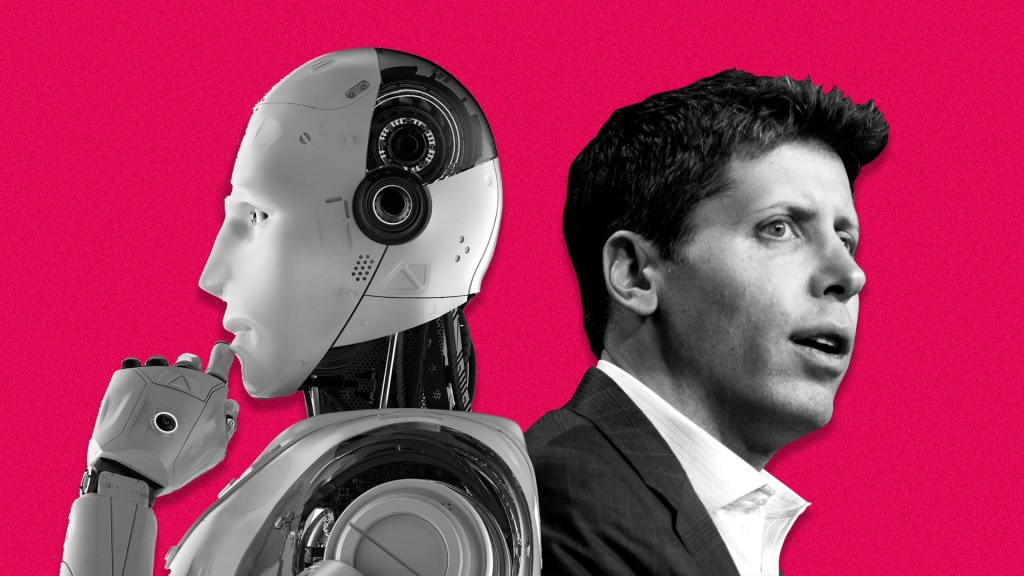
    I recently came across a reel of Sam Altman (CEO of OpenAI), where he was saying something like-

    “This is the best time to start a new career. The fear of failure or things not working out doesn’t weigh as heavily now, especially for those stepping into tech. Why? Because the next few years are going to be flooded with opportunities like never before.”

    I loved that reel. We’re at the cusp of exponential growth in technology, and the driving force behind this?

    Artificial intelligence.

    AI is already here big time and it is about to accelerate humanity into an entirely new era.

    Think of it this way: right now, AI is like a college graduate. It’s capable of doing tasks we associate with that level of expertise, like writing code, drafting content, solving problems. But here’s the twist: AI is constantly learning. Every interaction, every input from users around the world is shaping and evolving it.

    Soon enough, this graduate evolves into a post-graduate, more capable, more sophisticated. Before long, it’s a PhD holder, solving problems at a level we once thought only human geniuses could achieve.

    And then, imagine this: what happens when AI reaches the IQ of an Einstein?

    At that point, something incredible occurs. The future of innovation won’t come solely from human minds, it’ll come from AI. Infinite computational power means infinite potential. AI won’t just be a genius; it will be countless geniuses working simultaneously, innovating in ways we can barely comprehend right now.

    This is why I believe if you’re in tech or even thinking about entering the field, you’re standing at the edge of a massive wave. But here’s the catch: you have to stay sharp. You have to be willing to adapt, to learn, and to grow alongside these advancements.

    So, dive in, stay on your toes, and make sure you’re in it to swim. Because the future isn’t waiting, it’s already here, and it’s moving fast.