
Vinay Mundhe

A Software Developer Writing on Tech, Money, and Life

Tag: Elon Musk

  • First Principle Thinking

    First Principle Thinking

    Elon Musk used first-principle thinking to solve complex real-world problems at Tesla and SpaceX. I read about it, tried to simplify it and understand how we can use the same approach in our lives.

    What’s first principle thinking?

    First-principles thinking is like taking a problem apart to its most basic pieces, ignoring what everyone else says or does, and building a solution from scratch based on what’s absolutely true.

    It’s about asking, “What do we know is true?” and starting there instead of copying what’s already out there.

    To apply this in our lives, you will have to start questioning common advice and beliefs.

    Don’t just accept “this is how it’s done” (e.g. “you need a college degree to succeed” or “work 9-to-5 for 40 years”). Ask why those rules exist and if they make sense for you.

    Example in Life:

    You’re told to buy a house because “it’s a good investment.”

    Instead, break it down:

    What’s a house? A place to live that costs money (home loans, taxes, maintenance).

    What’s the goal? Financial security and comfort.

    Truth: Renting might be cheaper and give flexibility if you move often. So, you calculate costs and decide renting aligns better with your goals.

    Example in Career:

    Everyone says “climb the corporate ladder.” But you ask: What’s a career? A way to earn money and find purpose.

    Truth: Freelancing or starting a side hustle could give you more control and fulfilment. You test it by learning a skill like coding or design, skipping the traditional path.

    Elon Musk used the first principles at Tesla.

    He didn’t just accept that batteries were pricey. He looked at the raw materials, calculated their cost, and figured out Tesla could make batteries cheaper by building their own factories (like the Gigafactory). This helped Tesla make electric cars more affordable over time.

    How You Can Start

    Start questioning everything.
    Next time someone says “That’s just how it’s done,” ask:
    “Why?”
    “What’s the goal here?”
    “Is this actually true for me?”

    You don’t need to be Elon to think like him. You just need curiosity, courage, and the willingness to start from scratch.
  • When AI Steps Out of the Screen

    When AI Steps Out of the Screen

    Every day I scroll through news feeds talking about AI breakthroughs-GPTs writing code, Midjourney generating art, AI agents planning our entire day. And yet, when I look around-step outside, walk my street, grab a coffee-everything still feels… normal.

    Still see the traffic, Broken roads, Weird town planning.

    That gap between what AI can do and what we see it doing in the real world? It’s because AI, for now, is trapped. It’s stuck inside screens, chips, and cloud servers. It doesn’t have hands. It doesn’t move.

    But we’re closer to changing that than you think.

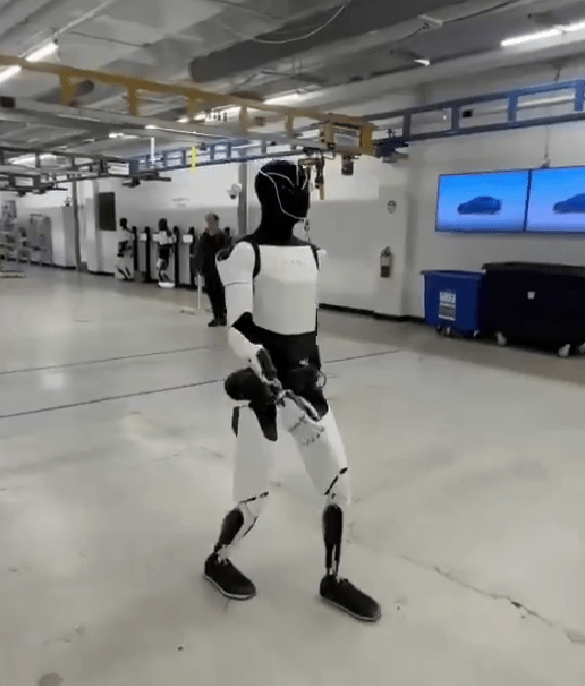
    Elon Musk recently shared a video of Tesla’s humanoid robot, Optimus, trying to walk.

    No, it’s not Iron Man (yet). But it’s moving. It’s learning. And what struck me wasn’t just the robot-it was Musk’s quiet announcement: Tesla is preparing to produce 10,000 to 12,000 Optimus units this year. In 2025, that could scale to 5,000 robots ready to hit the real world.

    Let that sink in.

    Not just AI in your pocket. But AI building your world.

    Now imagine this:

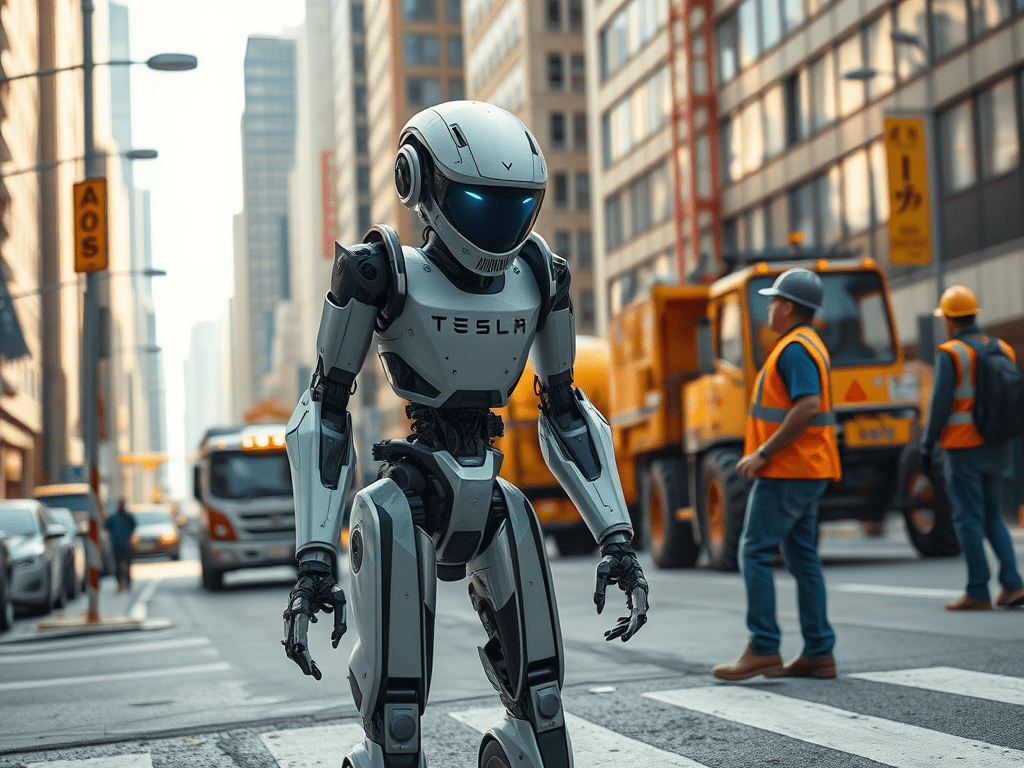
    • A team of humanoid robots working on road construction 24/7, without breaks or burnout.
    • A squad assembling homes brick by brick-precision, speed, no human risk.
    • AI-driven city planning bots laying out smarter, greener, more sustainable towns.
    • Manufacturing plants where robots do the heavy lifting, literally, while humans manage, direct, and innovate.

    This isn’t sci-fi anymore. It’s groundwork for the next revolution-when AI doesn’t just think, but also acts.

    And the best part? It could drastically improve the quality of human life. Lower construction costs. Faster disaster relief. Safer, cleaner cities. And maybe, just maybe, help us build homes on Mars one day.

    But here’s the catch-intelligence without ethics is dangerous. We don’t need a real-life Skynet. We need moral frameworks, strict boundaries, and strong governance to guide this tech. These robots shouldn’t just walk-they should walk right.

    We’re entering an era where AI will leave the chat window and walk into our neighborhoods. It’s not a matter of if. It’s when. And it’s happening faster than we think.

    The real question is-are we building the world we want to live in?