Vinay Mundhe

A Software Developer Writing on Tech, Money, and Life

Tag: Investing

  • A Hedge Against the Falling Rupee

    A Hedge Against the Falling Rupee

    Every Indian investor keeps talking about SIPs, large caps, small caps, and midcaps. But hardly anyone talks about something just as important:

    Your wealth is tied to the rupee, and the rupee keeps falling.

    See the following image. This is Rupee depreciation eating into your global purchasing power. You feel rich in INR. You feel average in USD. A big reason for the current FII outflow.

    This is why I’m slowly increasing my U.S. stock allocation.

    Let me break it down simply.

    My current split

    Right now, I have around 18–20% of my portfolio in U.S. equities.
    I’m planning to increase this to 30% over time.

    Not in a hurry.
    Not trying to time anything.
    Just a slow shift.

    Why?

    Because your money is silently losing value when the rupee weakens.

    The math nobody talks about

    This year, the rupee went from ₹83.30 → ₹90.50 against the dollar.

    That’s almost 7 rupees of decline.

    If you had simply held USD, without touching stocks, without doing anything fancy…

    ₹100 worth of dollars would’ve silently turned into ₹108.
    Zero effort.
    Zero stock market risk.
    Pure currency effect.

    Your money grows without the market helping you.

    Now imagine combining this with strong U.S. stocks like
    Apple, Nvidia, Microsoft, Amazon, Broadcom…

    You get a double benefit:

    • USD appreciation
    • U.S. market returns

    Meanwhile, inflation in India + rupee depreciation eats away your returns here.

    This is the part people usually ignore.

    Not running away from India, I’m just being practical

    I still invest heavily in India.
    My high-conviction bets are Indian companies (you already know them).
    But the rupee is not your friend long-term.

    Every decade, it quietly steals from you.

    That’s why I’m adding this hedge.

    How I’m doing it (simple strategy)

    I’m doing three things:

    • Adding slowly to major U.S. tech names
    • Keeping SIPs running in Indian MFs
    • Rebalancing whenever things look off

    30% U.S. exposure is enough to protect the downside and benefit from global growth.

    The takeaway

    Invest in U.S because:

    • Your rupee is weakening
    • Your global purchasing power matters
    • USD appreciation cushions your long-term returns
    • You want a portfolio that works in any scenario

    A simple hedge.
    A smart move.
    And something we Indians should consider seriously.

  • I Bought 3 New Stocks

    I Bought 3 New Stocks

    Over the past two months, I added three new stocks to my portfolio.

    All very different businesses. One’s making the tech behind electric vehicles. One’s building the chips powering AI. And one’s trying to rewire the way we discover medicines.

    But the common thread? They’re future-focused. Backed by real fundamentals. And not just “hot” names on social media.

    Here’s a breakdown of each — the story and the numbers.

    1. Sona BLW – India’s EV Backbone

    Sona BLW isn’t loud on Twitter. But it’s quietly becoming a major player in the EV supply chain — they make precision gears, motors, and drivetrains used in EVs and hybrids.

    This isn’t a “future potential” kind of bet. They’re already supplying global automakers, and with the EV shift picking up in India and abroad, the tailwinds are strong.

    Here’s what sealed it for me:

    • Revenue: 3 year CAGR growth – 26.69%
    • Operating Profit Margin: Solid 28.1%
    • Net Profit: ₹518 Cr in FY24, up from ₹395 Cr last year
    • Debt-to-Equity: 0.09 — nearly debt-free
    • EPS: ₹9.57 and improving year-on-year
    • My average buying price: ₹481.38

    In short: stable business, clean balance sheet, future-ready product line. Also, I’m betting on India getting benefitted from the manufacturing shift from China due to heavy US tariff and uncertainty.

    2. AMD – Chips are the New Oil

    I’ve had my eye on semiconductors for a while. When I finally pulled the trigger, I went with AMD.

    Why? Because they’re not just playing catch-up to Nvidia — they’re going after specific markets and winning. Data centers, gaming, high-performance computing, and now AI workloads.

    What gave me conviction:

    • Revenue: $25.8 billion in FY24 — up 14%
    • Net Income: $1.6 billion — 92% jump
    • Data Center Segment: Grew 57% YoY to $3.7 billion in Q1 FY25
    • AI bet: Strong product pipeline + double-digit growth expected in this segment
    • My average buying price: $98.70

    Sure, Nvidia’s the poster child of AI. But it’s already had a run. Where do partner companies will look for when they need an option?

    AMD is the quieter compounding machine. Cheaper valuation, strong fundamentals, and deep R&D bets.

    3. Recursion Pharma – My Moonshot

    Every portfolio needs that one risky, asymmetric bet. For me, that’s Recursion.

    They’re combining biotech with machine learning to speed up drug discovery. It’s risky. It’s bleeding-edge. And it won’t pay off tomorrow. Nvidia has invested in this company and that’s what brought this company to my attention.

    Here’s what I looked at:

    • Revenue: $58.8M in FY24, up from $44.6M
    • Net Loss: $463M — yeah, they’re burning cash
    • Collaborations: Received $30M from Roche & Genentech
    • Backers: Nvidia, Bayer, and others have skin in the game
    • My average buying price: $5.32

    This isn’t a traditional pick. I’m not chasing near-term profits. I’m betting that AI won’t just build apps — it’ll build cures. And Recursion could be part of that shift.

    I bought these US stocks using INDMoney app.

    The transfer of funds to US Wallet was faster and convenient. App UI is simple and has everything you need.

    If you are investing in US market, be prepared to hold long term to get taxed less as long term capital gain tax is lesser than short term capital gains. Also, invest in bigger chunks to reduce the remittance charges.

  • Practical Stock Market Rules that I Follow

    Practical Stock Market Rules that I Follow

    Let’s face it. Investing looks cool when your portfolio is all green, but staying consistently profitable? That takes a bit of homework, a pinch of discipline, and a good eye for fundamentals.

    Here are some investing rules that have helping me stay sane and grow my portfolio steadily, even when markets acted like a moody teenager.

    Read the Damn Concall

    Before you get tempted by a trending stock or a flashy YouTube thumbnail promising “Next Multibagger,” do this:

    Go to the company’s Annual Report. Read the Management Discussion and Analysis.

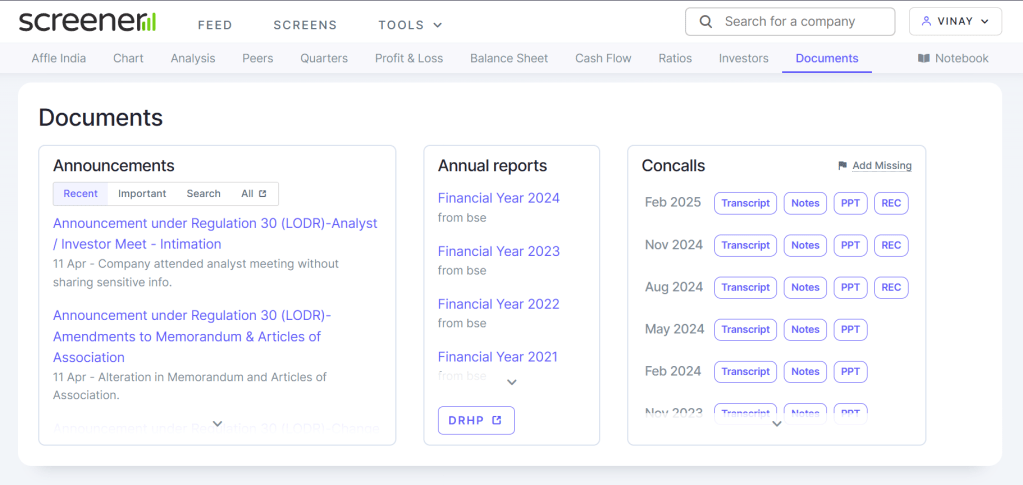
    Even better? Catch the quarterly concalls. Use tools like Screener.in. You can download concalls transcript from there. Concalls tell you what the company is actually planning, not what influencers are hyping.

    Screenshot from screener.in – Documents/ Reports section

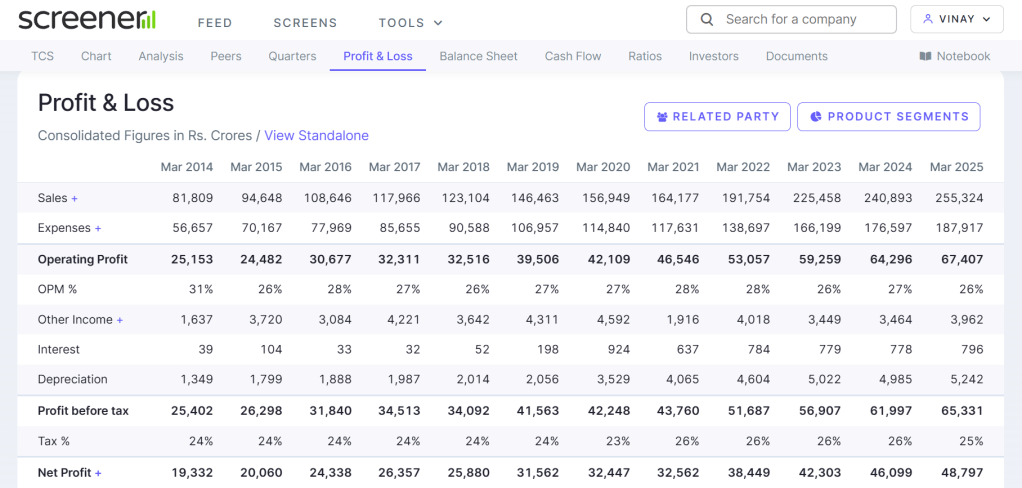
    The company’s financial data are goldmines for more context on how company is really doing. Make sure company is consistently growing in terms of revenue and Profits.

    Screenshot from screener.in – Profit and Loss section

    Avoid Stocks With Sky-High PE (Unless You Love Pain)

    If a stock’s Price to Earnings ratio is flying at 200 to 400+, ask yourself if you’re investing or just buying FOMO.

    PE ratio = stock price divided by the company’s earnings per share.

    It tells you how much people are willing to pay for each rupee of the company’s profit.

    A high PE means the stock is priced for big future growth. But when the hype fades or growth slows, these stocks often crash harder than your New Year resolutions.

    Valuations matter. There’s a reason even the best businesses crash when priced like they’ll change the world every quarter.

    Believe in the India Story (But Don’t Be Blind)

    India’s massive population and growing consumer base mean we’re just getting started. There’s still a long runway ahead… more people entering the workforce, rising incomes, urban expansion, digital adoption. All of it signals economic progress in motion.

    And that’s the opportunity. We’re not just spectators; we can ride this growth if we pick the right players.

    But don’t get carried away. Just because a company has “India” in its tagline doesn’t make it invest-worthy.

    Do your homework. Compare revenue, profit margins, debt, and ROE. Let fundamentals guide your bets… not blind optimism. Also, don’t marry your stocks. Winners change. Rotate when the data tells you to.

    Winners Deserve Your Trust (And Your Capital)

    If a stock in your portfolio has outperformed others, don’t just clap, add more. Ride the momentum. Winners often keep winning until they don’t.

    Which brings me to…

    Know When to Cut and Run

    • Stock at all-time high for no clear reason? Take some profits.
    • Company posts a bad quarter and management sounds confused? Cut your position.

    This is not emotional. This is maintenance. Just like you clean your room (hopefully), you clean your portfolio.

    What’s Down? What’s Cheap? Investigate It.

    When everyone’s running away from an asset, that’s when you pay attention.

    • Is it down because of a short-term trend or long-term trouble?
    • Are the fundamentals still solid?

    If yes, and the price is at a discount, go in like it’s free cake with chocolate on top.

    Selling? Do It Smartly

    If an asset is booming and you feel like it’s overvalued, don’t wait for a crash.

    Take profits in slices. Maybe sell 10 to 20 percent of your position. This way, you secure gains and stay in the game in case it still runs.

    KISS (Keep It Simple, stupid!)

    Most successful investing strategies are boring.
    They don’t involve 17 indicators and 9-hour screen time.
    They involve:

    • Knowing what you own
    • Tracking performance
    • Making data-driven decisions

    If you’re just guessing, you’re gambling. Might as well head to Goa.

    Investment Avenues for Indian Investors

    Here’s where you can put your money to work:

    • Indian Stock Market (Equities, Mutual Funds, ETFs)
    • US Stock Market (via INDMoney, Vested, etc.)
    • Gold and Silver (SGBs, ETFs, physical)
    • Crypto (risky but rewarding if done right)

    Each of these plays differently in market cycles. Rotate and rebalance based on trends, valuations, and your risk appetite.

    Final Word

    This isn’t about timing the market perfectly. It’s about building habits that stack the odds in your favor.

    If you’re willing to put in the work, just like you do for your gym gains or side hustle, investing can become your greatest wealth-building engine.

    So here’s a question for you:
    What’s one investing mistake you wish you never made?

    Drop it in the comments or shoot me a DM. Let’s learn and grow together.

  • Budget and the Stock Market

    Budget and the Stock Market

    The budget is out, and it’s clear that government is playing to the masses. More tax benefits, more subsidies, and more money in the hands of the middle class and lower-income groups.

    What does that mean for the stock market?

    Today’s market reaction gave us a preview:

    • PSU stocks (defense, green energy, railway) dipped.
    • Consumption, FMCG, and real estate stocks rallied.

    This isn’t just a one-day trend, it’s a theme that could last months or even years.

    Why Consumption Stocks Will Run

    When people have more disposable income, they spend—it’s basic economics. Think about it:

    • More money saved from tax cuts? → More dining out, ordering food, and shopping. (Zomato, Nestle, ITC, HUL win.)
    • Extra cash flow? → More home upgrades—new ACs, refrigerators, TVs. (Voltas, Havells, Whirlpool benefit.)
    • A stable economy? → More real estate demand. (DLF, Godrej Properties, Macrotech boom.)

    The market is already reacting as Zomato surged 7% today, and FMCG stocks were up 3-4%.

    Now, How to Play This Market?

    The playbook is simple:
    Stay bullish on FMCG, consumption, and real estate.
    Look for companies that benefit from rising consumer spending.
    Avoid PSU-heavy themes unless there’s a policy push.

    Modi government will most likely priorities keeping the masses happy in his third term.

    Play accordingly.

    And if you are a long term investor with a 5-10 years view-point, and you are a chad long term investor, you better keep investing in the companies with good fundamentals, irrespective of the sector.

    As, in the end, India will do well anyhow in the long run.

    We are survivors.

  • How I Pick Stocks Without Overcomplicating It

    How I Pick Stocks Without Overcomplicating It

    Have you heard about the KISS theory?

    KISS stands for “Keep It Simple, Stupid.”

    And honestly, that’s exactly how I approach investing in stocks. No drama, no overthinking, just straightforward logic.

    Speaking of overthinking, have you seen this meme?

    It perfectly sums up the chaos that happens when you complicate what should be simple!

    And believe it or not, ‘The chad long term investor’ is the one who makes a lot of money in stock market.

    So here’s how I keep it simple while choosing a stock:

    1. Data-Driven Decisions: I always base my investment choices on solid data. One of my go-to resources is Screener.in, which offers a lots of data for the Indian stock market. This platform provides various metrics that guide my decisions.

    2. Invest in Transformative Companies: I once heard Jeff Bezos’ philosophy, he said, “Invest in the companies that you think will change the world.”

    This mindset helps identify long-term winners.

    3. Choose Promising Sectors: It’s crucial to invest in sectors poised for significant growth in the next 5-10 years. This forward-thinking approach ensures your investments align with future trends.

    For now I think Renewable energy, EV, Semiconductor, AI, Data centers, Space – are some of the new-age sectors that can be huge in coming years.

    Do your own research on this, but don’t overcomplicate.

    Key Metrics I Focus On:

    • Sales Growth and Net Profit: I examine quarterly results, focusing on sales growth and net profit. I look for companies that have doubled their sales in the last 3 to 4 years, indicating strong growth potential. Net profit is equally important – it shows if a company is not just growing but also profitable.
    • Balance Sheet: I always check reserves and borrowings. Increasing reserves signal a company is setting aside funds for the future, while low long-term debt indicates financial stability.
    • P/E Ratio: This is my starting point. If a stock’s P/E ratio is over 100, it’s often a red flag, unless it’s a new-age company like Zomato, where higher P/Es are more common. Comparing the stock’s P/E with the industry average can provide more context.
    • PEG Ratio: This ratio is crucial. A PEG ratio below 1 often means the stock is undervalued, making it a potentially great buy. But often, I have bought companies having a less than 3 PEG ratio, as the future seemed promising.
    • EPS (Earnings Per Share). It’s a quick way to see how much profit a company is making per share and whether it’s worth my attention. It’s like checking the foundation before building anything fancy—essential and often overlooked.
    • Compounded Growth: I also pay attention to compounded sales and profit growth, along with the stock’s CAGR. Consistent growth over 5 or 10 years is a good indicator of a company’s performance.

    And most importantly, Don’t buy at an all time high.

    Stock market opens everyday (well, almost!). You always get a chance to buy your favorite stock at a better price.

    Investing is all about making informed choices. By focusing on these metrics and selecting sectors with promising futures, you can identify growth-oriented companies with strong potential.

    Be a chad long term investor!